The Search for Regional Security in the Shadow of the Yemen Crisis
Ersin Erçin Ambassador (Ret.)
Barely two months after the Defense Agreement was signed in Mecca on August 7, Türkiye and Pakistan have found themselves confronting the challenges arising from renewed hostilities between Saudi Arabia and the Houthis. An arrangement that promised regional solidarity and collective deterrence is now raising questions about how it can be implemented, and where military support should begin and end. For Ankara, the central challenge is to gain a stronger voice in Gulf security while preserving its own freedom of decision.
The pact’s significance extends beyond the military capabilities it might bring together. Saudi Arabia’s search for more diverse security partnerships, Türkiye’s regional influence, and Pakistan’s longstanding ties with Riyadh now converge within a common framework. Whether this convergence can develop into a lasting security arrangement, however, appears to depend on how far the three capitals can reconcile their differing priorities.
Riyadh’s Security Calculus
Understanding the agreement requires a closer look at Saudi Arabia’s evolving approach to security. Missile and drone threats originating from Iran, alongside concerns about the limits of US deterrence, are encouraging Riyadh to cultivate several partnerships rather than depend on a single security provider. Its ties with Türkiye and Pakistan can be read as part of that broader search.
There is also an element of regional leadership in this choice. At a time when the actions of Iran and Israel are seen as sources of instability, Riyadh is seeking a more prominent role in maintaining stability by joining a security arrangement with an influential regional actor such as Türkiye. The Mecca agreement could therefore provide the Saudi leadership with diplomatic weight as well as military support.
Mutual defense commitments are not entirely new to Riyadh. Saudi Arabia is already part of the collective defense arrangement concluded in 2000 among the six members of the Gulf Cooperation Council. It also signed a mutual defense agreement with Pakistan in September 2025. In practice, however, these arrangements have not delivered an effective response. Any assessment of the new pact needs to take account of the distance between political commitments and the means available to give them effect.
Pakistan has already deployed troops and air defense assets to Saudi Arabia under their bilateral agreement. Additional support from Türkiye and Pakistan is not expected to transform the military balance. The nature of their contribution will depend on the source of the threat and the decisions each government takes in the particular crisis.
Diplomatic effects may emerge sooner. At the outset of the Iran war, Riyadh used its closer partnership with Islamabad primarily to influence negotiations with Tehran and contain escalation. This experience suggests that defense partnerships can also strengthen channels of communication during a crisis. That possibility deserves attention when considering Türkiye’s contribution to the pact.
The First Test in Yemen
The conflict in Yemen has a long history in which local struggles for power and regional rivalries have become intertwined. The Zaidi-rooted Ansar Allah movement, commonly known as the Houthis, has a political trajectory distinct from that of the separatist groups in southern Yemen. Iranian support has strengthened its military capabilities, but the Houthis also have their own objectives and local constituencies. Their capture of Sanaa in 2014 was followed by the Saudi-led intervention in March 2015.
The UN-mediated truce of April 2022 offered an important respite. Although it was not formally renewed in October that year, a period of relative calm, marked by reduced cross-border hostilities, largely endured. Recent developments suggest that this fragile balance is breaking down once again.
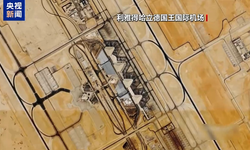
One significant turning point came on July 13, 2026, when the Yemeni government announced that it had struck the runway at Sanaa airport to prevent an aircraft arriving from Iran from landing. The Houthis held Saudi Arabia responsible and launched missile attacks against Saudi targets.
Signed against this backdrop, the Mecca Agreement stipulated, according to its publicly announced framework, that an armed attack on any one member would be regarded as an attack on all three. At the first committee meeting in Istanbul on August 31, the three countries’ foreign and defense ministers and chiefs of general staff emphasized regional ownership and the peaceful resolution of crises. In September, Houthi advances toward Mocha and Perim Island heightened concerns about energy and trade routes through the Red Sea. While these developments did not amount to control over all shipping through Bab el-Mandeb, they demonstrated the conflict’s potential to reach beyond Yemen’s borders.
After the Yemeni government announced an offensive on October 4 to recapture Houthi-held areas, the relevant ministers of the Mecca Pact countries met in Riyadh. At Saudi Arabia’s request, they agreed on measures to expedite the deployment of military forces and capabilities to the kingdom. The communiqué’s references to compliance with national legislation and arrangements yet to be agreed left the parties room to take decisions within their respective national frameworks.
Foreign Minister Hakan Fidan’s statement on October 8 brought Ankara’s position into sharper focus. Türkiye, he said, would not participate in offensive operations; a defensive contribution was under consideration, and preparations to submit the agreement to parliament were largely complete. Reports that existing support was being provided mainly on a bilateral basis further suggest that the relationship between the trilateral commitments and missions on the ground has yet to be fully clarified.
The NATO Analogy and Expectations of a Nuclear Umbrella
The provision treating an attack on one member as an attack on all naturally brings NATO’s Article 5 to mind. Yet NATO does not require every ally to undertake the same form of military intervention. Each member provides assistance through the measures it considers necessary. The treaty’s geographical scope, constitutional procedures, and provisions concerning compatibility with other international commitments also define the limits of that obligation.
Türkiye’s establishment of a new defense partnership is compatible with its NATO membership, but it does not extend NATO protection to Saudi Arabia or Pakistan through Türkiye. Nor would an attack on Turkish troops on Saudi territory automatically trigger Article 5 protection, given the geographical scope of the North Atlantic Treaty.
The principal distinction between the Mecca Pact and NATO lies in the institutional foundations of collective defense. Established force planning, joint command arrangements, and intelligence sharing may develop over time. The military strength of the three countries does not, in itself, mean that they will make the same threat assessment in every crisis. It therefore seems premature to describe the agreement as a NATO-style alliance or a clearly defined new regional bloc. The term “Islamic NATO” risks inflating expectations and heightening the concerns of outside actors rather than explaining the arrangement as it stands.
Similar caution is warranted on the nuclear dimension. Pakistani officials had stated that the defense agreement signed with Saudi Arabia in 2025 did not include a nuclear umbrella. That statement does not support treating Pakistan’s nuclear capability as an automatic guarantee for Türkiye and Saudi Arabia. The existence of such a commitment cannot be inferred from capabilities or political suggestions alone. Even if ambiguity is thought to strengthen deterrence, it could also complicate crisis management by creating divergent expectations among the partners.
The Legal Position and the Limits of the Military Mission
The debate in Türkiye centers on how the Mecca Agreement will enter into force and which missions it will authorize. Article 90 of the Constitution makes ratification of international treaties subject, with certain exceptions, to parliamentary approval through legislation. Whether a collective defense arrangement of this scale could fall within the exceptions for technical cooperation appears open to question.
Article 92 is particularly relevant to the deployment of troops abroad. Although the principal authority rests with the Turkish Grand National Assembly, exceptions exist for circumstances required by treaties to which Türkiye is a party or by the rules of international courtesy. The legal basis and scope of each deployment therefore need to be assessed separately. The President’s authority in the event of a sudden attack on Türkiye while parliament is in recess does not provide a direct basis for defending another country.
If Ankara intends to rely on existing bilateral agreements, clarification of how far they cover the proposed missions would be useful. There are significant differences between a framework designed for training and technical support and one authorizing combat duties. It is difficult to reach definitive legal conclusions about every measure without examining the relevant documents. Nevertheless, subjecting the principal text and any annexes that create obligations to parliamentary scrutiny, under appropriate confidentiality procedures, could place both the domestic debate and the partners’ expectations on firmer ground.
Under international law, Article 51 of the UN Charter provides the basic framework for collective self-defense against an armed attack. The request of the state under attack, the requirements of necessity and proportionality, and the obligation to report to the Security Council remain central. Providing defensive support on Saudi territory and conducting operations against targets inside Yemen would not raise identical legal questions. Even where an invitation from Yemen’s recognized government is involved, the scope of operations and obligations under international humanitarian law require separate consideration. Iranian support for the Houthis is not, on its own, sufficient to attribute every Houthi action directly to Iran.
Risks on the ground may also extend beyond the agreement’s use of the term “defense.” There is a clear difference in the degree of military engagement between equipment sales, training and maintenance support, and Turkish personnel intercepting Houthi missiles. Direct targeting assistance or electronic activities integrated into military operations may also call for separate assessments.
One of the most sensitive possibilities is that an initially limited mission could expand in response to unforeseen developments. An attack on an air defense unit might prompt additional measures to protect personnel, which could in turn lead to demands to neutralize the source of the attack inside Yemen. Defining the mission’s geographical limits, duration, rules of engagement, and national command authority at the outset could help prevent such an expansion without a fresh political and legal assessment.
Gains and Costs for Türkiye
The Mecca Agreement could give Türkiye greater influence over decisions affecting Gulf security. Defense production, technology, training, and maintenance projects could also add a new dimension to economic relations. Saudi financial resources, Turkish industrial capacity, and Pakistan’s military experience appear capable of complementing one another in certain areas.
Against these potential gains stand the cost of sustained deployments, the use of defense stocks, and the resources Türkiye needs for its own requirements. Assessing export and investment prospects alongside military responsibilities will be important to the partnership’s long-term sustainability.
Ankara’s wish to be a reliable partner need not entail participation in every military course Riyadh chooses. If the reassurance provided by the agreement encourages the Saudi side to undertake more ambitious operations, Türkiye’s room for maneuver could narrow. Effective consultation before decisions that might widen a crisis will therefore be an important part of the partnership, alongside the commitment to provide assistance.
Protecting trade in the Red Sea involves a similar balance. Greater stability could ease pressure on freight and insurance costs. If the Houthis come to regard Türkiye as a direct adversary, however, risks to Turkish-flagged vessels could increase. The political and military framework of Türkiye’s contribution to maritime security may influence which of these possibilities carries greater weight.
Deterrence vis-à-vis Israel
The hardening of rhetoric in Israel that casts Türkiye as an adversary is causing concern in Ankara, particularly when viewed alongside conflicting interests in Syria. The Mecca Pact could become an additional factor in Israel’s assessment of the costs of a possible attack. Its weight would depend on confidence in the three capitals’ willingness to act together.
Riyadh and Islamabad cannot be expected to assign the same priority to all of Ankara’s regional disputes. An attack on Turkish territory, the targeting of Turkish forces in Syria, and operations in Palestine or Lebanon could elicit different assessments from the partners. Until the agreement’s coverage of forces stationed abroad is clarified, it is difficult to anticipate a collective military response in all these circumstances.
In Yemen, an unintended outcome is also possible. Direct conflict between Türkiye and the Houthis could divert the movement’s forces to another front and ease pressure on Israel. Such an indirect consequence would, of course, be insufficient to demonstrate that the agreement was designed to serve Israeli objectives. Equally, the Houthis’ stated campaign against Israel does not remove their responsibilities regarding the safety of civilians and commercial shipping.
The pact’s regional credibility will also be tested by its approach to threats from different sources. An arrangement seen as effective against Iran-linked actors but ineffectual in the face of Israeli acts of aggression could struggle to win acceptance for its claim to provide collective defense.
Ankara’s Other
Relationships
Türkiye’s growing ties in the Gulf are being closely watched in Greece. Closer relations with Riyadh, however, do not mean that Saudi Arabia will endorse all of Ankara’s positions in the Aegean and Eastern Mediterranean. Presenting the pact as an attempt to encircle Greece could encourage Athens to deepen military relations with Israel and other partners. Türkiye might secure more lasting benefits by using the confidence generated by its new partnership to broaden the scope for negotiation. Maritime jurisdiction disputes and economic projects such as the India–Middle East–Europe Economic Corridor, or IMEC, will continue to depend on many factors beyond the pact.
For Iran, greater responsibility for regional security on the part of regional countries may be welcome in principle. If it develops through an arrangement that excludes Tehran, however, it could feed fears of encirclement. Perceptions of Ankara’s contribution as part of a wider alignment against Iran could carry tensions in Yemen into Türkiye–Iran relations. Maintaining dialogue with Tehran while drawing closer to Riyadh, and explaining the limits of military commitments, could preserve the diplomatic space needed to reduce that risk.
The implications of solidarity with Pakistan for relations with India and Afghanistan also require care. New Delhi will watch how the pact might be applied in an India–Pakistan crisis. Saudi Arabia’s close relations with India are a reminder that the partners’ priorities may not always coincide. Treating the Kashmir dispute, terrorist attacks, and border clashes as occasions for the same automatic response could unnecessarily restrict Ankara’s options.
On Afghanistan, Türkiye’s ability to engage Kabul is valuable alongside its defense relationship with Pakistan. The distinction between the activities of armed groups on Afghan territory and the direct responsibility of the Taliban administration is one of the more sensitive aspects of this diplomacy. If Ankara is perceived as Pakistan’s military partner in every crisis, its scope for mediation could diminish. Using its influence within the partnership to encourage agreement on border security and reciprocal commitments could produce more constructive results.
A Changing Regional Order
The Mecca Pact also forms part of the debate about the US role in the region. In US policy circles, the agreement is being read as a sign that Riyadh is moving away from its pursuit of a guarantee from Washington comparable to NATO’s Article 5. It is not, however, being interpreted as a rejection of the Saudi–American partnership.
That distinction matters. Greater security responsibility on the part of regional countries could limit American influence in some areas while also easing Washington’s military burden. If the United States moves from directly providing security guarantees toward coordinating its partners’ capabilities and cooperation, the trilateral arrangement could be consistent with that shift. For Türkiye, the decisive question is how much room the emerging division of responsibilities leaves for Ankara’s priorities and independent decision-making.
China could benefit from secure energy flows and trade routes. A new confrontation with Iran arising from the pact, however, could alter Beijing’s calculations. Russia, too, may view a decline in American regional influence differently from an increase in Türkiye’s influence. Rather than assume a declared, uniform position in either capital, it seems more useful to observe their responses to specific developments.
Egypt’s participation would undoubtedly add considerably to the agreement’s effectiveness. In any event, the choices of Egypt, as well as those of the UAE, Qatar, and Oman, will influence the trilateral arrangement’s room for maneuver. A partnership attentive to these countries’ concerns may find broader regional acceptance. In Yemen, the differing objectives of local actors mean that military success will not automatically produce a postwar political settlement.
Turning the Search for Security into an Opening for Peace
Türkiye’s diplomatic opportunity lies in advancing ceasefire efforts alongside its defensive contribution. Ensuring that a mission intended to protect Saudi cities does not evolve into a campaign to seize territory in Yemen or eliminate the Houthis could strengthen the credibility of that approach. Working through UN and Omani channels of communication could help bring the pact’s political weight to bear on negotiations.
The mounting toll on the Yemeni people must also remain central to this assessment. Displacement, the destruction of civilian infrastructure, and obstacles to humanitarian access are not secondary issues separate from military developments. They directly affect the prospects for the stability the parties seek to establish. Without a credible path toward a political settlement, gains made in the name of security will also be difficult to sustain.
The Mecca Pact has the potential to enhance Türkiye’s regional influence. Realizing that potential depends on Ankara’s ability to reassure its partners while preserving the limits of its own commitments. Contributing to Riyadh’s security while maintaining dialogue with Tehran, and standing alongside Pakistan while keeping channels open with India and Afghanistan, will require a careful balancing effort by Turkish diplomacy.
The agreement’s lasting value will be measured as much by the political outcome its forces serve as by the number deployed in the first crisis. If Türkiye can bring its military capabilities and diplomatic experience to bear on the same objective, the partnership established in Mecca could help foster an approach to security that keeps the region from being drawn into further wars.