The NATO Leaders’ Summit held in Ankara on 7–8 July 2026 took place at a critical moment, as the Alliance was seeking answers to a set of increasingly existential questions. In that sense, the Summit—amounting to a negotiation over the new balance of power within the Western security architecture—was at once an exercise in restoring confidence, a bargaining process over burden-sharing, and a mobilisation of defence-industrial capacity.
For Türkiye, as host nation, the Ankara meeting represented more than diplomatic prestige. It marked a turning point at which NATO’s threat perception was recalibrated, defence-industrial cooperation was broadened, and the Alliance’s discourse on its southern flank was visibly strengthened.
What made the Ankara Summit particularly significant was not merely the fact that the Russia–Ukraine war was still ongoing. The meeting unfolded in a geopolitical environment shaped simultaneously by the Iran crisis, tensions in the Strait of Hormuz, growing pressure on Europe to raise defence spending, the impact of President Donald Trump’s second-term rhetoric on NATO, the way the Greenland debate exposed strains of mistrust among Allies, and the question of how support for Ukraine could be sustained over time. The central issue discussed in Ankara, therefore, was not simply “What will NATO do next?” The more fundamental question was this: by what political logic, with what distribution of financial burdens, and with what strategic understanding of geography will NATO proceed from here? The Ankara Summit Declaration did not offer radical answers to these questions, but it did provide carefully calibrated ones.
The Ankara Summit and Its Implications for NATO and the Regional/Global Balance
The first important outcome of the Ankara Summit was that NATO managed to project a disciplined image of unity sufficient to keep the institutional framework intact, without concealing the political fault lines within the Alliance. In the run-up to the Summit, the dominant concern in European capitals was whether the U.S. President might turn Ankara into a new focal point of NATO crisis. President Trump’s public remarks on the margins of the Summit showed that such concerns were hardly unfounded. His assertion that Allies had not done enough to support the United States over the war with Iran, his branding of Spain as a “terrible partner” over defence spending, his decision to revive the Greenland issue, and his renewed harsh rhetoric toward Tehran rather than the language of de-escalation all cast a shadow of intra-alliance tension over the opening of the Summit.
Trump’s approach to NATO remained, as ever, less a matter of strategic loyalty than of transactional political and financial accounting. In his exchanges with the press, he continued to ask who was paying how much, who was sharing the American burden to a meaningful extent, and who was standing with Washington in times of crisis.
By contrast, NATO Secretary General Mark Rutte—who played a significant role in ensuring the success of this critical Summit—managed in Ankara to keep the Alliance together not by excluding Trump, but by adapting NATO as far as possible to his demands. Rutte’s pre-summit press conference, his remarks on the morning of the Summit, and his subsequent media engagements all pursued the same political objective: to underscore to Trump that Europe and Canada were indeed increasing their share of the burden; that in 2025 they had committed more than $139 billion in additional defence investment; that new procurement decisions worth over $50 billion had been announced in Ankara; and that collective defence-industrial capacity would be expanded. Put differently, Rutte defended NATO before Trump not with declarations of loyalty, but through what might be called the diplomacy of balance sheets. In essence, this posture illuminated an important structural development within the Alliance: NATO is increasingly becoming an organisation that must generate legitimacy not merely through political solidarity, but through concrete spending, concrete action, and measurable capability growth.
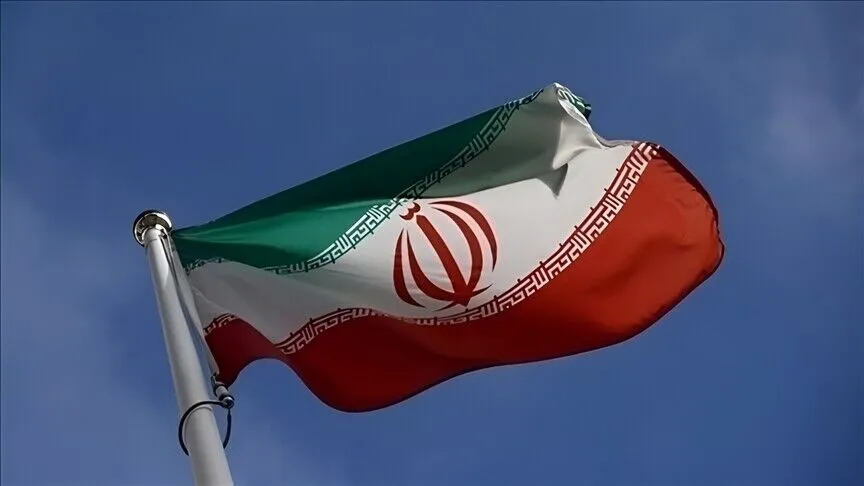
A second important consequence of the Ankara Declaration was that NATO’s threat perception, at the level of official text, became more layered and more complex. While the Declaration continued to describe Russia as a “long-term threat” to Euro-Atlantic security and stability, it referred in the same paragraph to terrorism as a “persistent threat.” In my view, this dual emphasis was no coincidence. In recent years, while Russia has constituted an existential threat for Allies on NATO’s eastern flank, countries on the southern flank—Türkiye foremost among them—have been increasingly uneasy with the relatively secondary place accorded in NATO’s agenda to terrorism, state collapse and the vacuums it creates, irregular migration, the security of energy routes, and instability emanating from the Middle East. In this context, the Declaration’s insistence that Iran must never acquire a nuclear weapon, and its explicit reference to freedom of navigation in the Strait of Hormuz, amounted to more than a warning directed at Tehran. It was also a political signal that crises in NATO’s southern neighbourhood are once again being framed under the heading of Alliance security.
A third noteworthy outcome was the emerging consensus that NATO is evolving beyond a defence alliance in the narrow sense into an increasingly significant platform for coordinating defence industry, technology, and production. The inclusion in the Ankara Declaration of such phrases as “collective manufacturing capacity,” “working with industry,” “accelerating innovation,” “eliminating barriers to defence trade,” and “an interoperable transatlantic warfighting cloud” elevated the document beyond the level of an ordinary political communiqué. NATO is no longer speaking only of deterrence and solidarity. It is speaking of production, procurement, standardisation, data architecture, and the transformation of the battlespace through artificial intelligence. This points to an organisational evolution distinct from the NATO of the Cold War. While strengthening conventional deterrence against Russia, the Alliance is also moving toward the creation of a common market in defence technology and industrial capacity among its members.
The expansion of Europe’s defence-industrial base, the relative reduction of dependence on the United States, the replenishment of ammunition stocks, and the building of shared capabilities in such fields as unmanned systems and integrated air and missile defence have now moved to the centre of NATO politics.
A fourth outcome was that, while the financial burden of the Ukraine file has in practice been shifted increasingly onto Europe, the political framework surrounding it continues to be preserved by NATO. The Declaration’s pledge of €70 billion in military equipment, assistance, and training for Ukraine in 2026, together with the commitment to sustain at least equivalent levels in 2027, indicates that Europe is assuming a more central role in the medium-term financing of the war effort. The text’s explicit statement that “European Allies and Canada now finance the vast majority of security assistance to Ukraine” effectively registered a compromise formula: one that significantly reduces the burden borne by the Trump-era United States on the Ukraine dossier while preserving NATO’s strategic line. Even if this does not yet amount to strategic autonomy for Europe, it is one of the clearest signs that Europe is being pushed toward strategic burden-sharing.
A fifth major consequence of the Ankara Summit was that it effectively redefined the nature of the transatlantic bond. The formula contained in the Declaration—“a stronger Europe in a stronger NATO”—confirms on the one hand that Europe must assume greater responsibility, while on the other making clear that this strengthening should occur not through a defence order outside NATO and independent of it, but within the Alliance itself. This formulation is, in effect, the diplomatic translation of a reality accelerated by Trump’s pressure: Europe will have to devote more money, more industrial capacity, and more political responsibility to defence, but it will do so not by decoupling from the United States, rather by constructing a balance that helps keep the United States anchored in the Alliance. In this sense, the Ankara Summit was not a summit that fractured NATO; it was a summit that repackaged NATO for the United States in financial and industrial terms.
II. The Ankara Summit’s Implications for Türkiye
From Türkiye’s perspective, the significance of the Ankara Summit extended well beyond the diplomatic visibility that comes with hosting such a gathering.
For some time, Türkiye has advanced three core arguments within NATO. The first is that the Alliance’s threat perception cannot be constructed solely around Russia and the eastern flank; threats emanating from the south must be taken into account on an equal footing. The second is that restrictions within NATO on defence-industrial cooperation are incompatible with the spirit of alliance. The third is that the evolving European security and defence architecture must not harden into an exclusive club that leaves Türkiye outside. The Ankara Summit and its final declaration created a setting in which all three of these themes were strengthened, at least at the level of discourse.
In President Erdoğan’s remarks during the Summit, as well as in the assessments reflected in the media, the most prominent theme was the removal of defence-industrial restrictions among Allies. In recent years, Türkiye has faced an unprecedented dilemma within NATO as a result of the S-400 crisis, CAATSA sanctions, and the overt or tacit export restrictions imposed by certain European Allies.
Against that background, the sentence in the Ankara Declaration stating that “we will continue our work to eliminate defence trade barriers among Allies” is, from Türkiye’s perspective, far from a routine bureaucratic phrase. To be sure, that sentence alone does not lift sanctions, resolve the F-35 issue, or erase political disputes. But it does legitimise, at the level of principle, a core Turkish objection that has long been voiced. If NATO is serious about deepening defence production and joint procurement, then barriers erected among Allies for political reasons will, over time, become increasingly difficult to sustain.
Türkiye’s second major gain lies in the renewed visibility of southern-origin threats. The references in the Declaration to Iran and Hormuz, the placement of terrorism in the same paragraph as Russia, and the reaffirmation of a 360-degree security approach all reinforce Ankara’s longstanding argument that NATO is not merely an alliance of the Baltics, but also of the Mediterranean, the Black Sea, and the broader Middle East. For Türkiye, security is not a Moscow-centric equation alone. Terror networks in Syria and Iraq, the fragility of the Eastern Mediterranean balance, the risk of escalation in the Iran–Israel confrontation, vulnerabilities around Hormuz and Bab el-Mandeb, irregular migration, and energy security continue to define the agenda of the southern flank. By drawing these issues back into NATO’s official discourse, the Ankara Summit effectively supported one of Türkiye’s most important strategic theses.
A third important dimension is that Türkiye’s geostrategic weight within NATO became more visible thanks to the Ankara Summit. The decision to hold NATO’s 2026 summit in Ankara was not merely a matter of scheduling. To convene the Alliance in the capital of a country situated on NATO’s southeastern flank, bordering the Black Sea, capable of talking to Russia, maintaining defence cooperation with Ukraine, located on the immediate periphery of Middle Eastern crises, and occupying a pivotal position in Europe’s energy and transport corridors, was to acknowledge that Türkiye is not a dispensable actor but one that must be taken into account. That acknowledgement does not automatically translate into political advantage for Türkiye, but it undoubtedly increases Ankara’s weight at the table when the future of NATO is debated.
Fourth, the Ankara Declaration’s emphasis on defence technologies, artificial intelligence, the warfighting cloud, unmanned systems, and integrated air and missile defence opens for Türkiye not only a political but also an industrial opportunity. Over the last decade, Türkiye has developed significant capabilities in particular in unmanned aerial systems, smart munitions, electronic warfare, and certain missile and air-defence components. NATO’s depiction of the future battlespace as data-intensive, network-centric, AI-enabled, and heavily reliant on unmanned systems creates a new framework within which Türkiye can more effectively channel its expertise into intra-alliance cooperation and joint production mechanisms. Yet for this opportunity to become a tangible gain, political restrictions will need to be eased, and Türkiye will need to be integrated into the European defence-industrial architecture through an inclusive rather than exclusionary logic. Naturally, Ankara itself will also have to align its defence diplomacy more systematically with economic and industrial objectives.
Another noteworthy dimension of the Summit from Türkiye’s standpoint was the character of the contacts between U.S. President Donald Trump and President Erdoğan in Ankara, which clearly went beyond the confines of an ordinary “meeting on the margins” of a summit. The weight of the encounter, approaching the format of an official visit, strengthened the political channel at the leaders’ level in a Türkiye–U.S. relationship that has long been defined by problem files. Given the F-16 and F-35 dossiers, the trust deficit created by CAATSA sanctions, the Syrian theatre, restrictions in the field of defence industry, and the broader balance in the Black Sea and the Middle East, the practical significance of this contact was as important as its symbolism. The personal diplomatic chemistry between Trump and Erdoğan, while by no means a substitute for institutional solutions, can nonetheless create political momentum in files that have otherwise become blocked. In this sense, the Ankara Summit provided Türkiye not only with greater visibility within NATO, but also with an opportunity to remind Washington that Türkiye remains both an indispensable Ally and an unavoidable interlocutor.
Conclusion: A Necessary Transformation Registered in Ankara
The historical importance of the Ankara Summit lies not in having resolved all of NATO’s current problems, but in having demonstrated with unusual clarity the direction in which the Alliance must evolve if it is to preserve its survival. The new NATO is one with higher costs; one that produces more; one that places defence industry at the centre of its strategic architecture; one that seeks to sustain long-term support for Ukraine; and one that, while continuing to face the Russian threat, must also take southern-origin risks more seriously into account. Put differently, what was reaffirmed in Ankara was not merely the Alliance’s solidarity, but the reality that this solidarity will henceforth have to be rebuilt on a far more costly, far more technical, and far more openly negotiated basis.
The picture that emerged in Ankara is therefore clear. NATO will continue to exist not in the comfort of an older transatlantic romanticism, but within a harder security order—one with higher costs, more fragile politics, and a greater openness to bargaining. The Ankara Summit effectively declared that the Alliance must transform if it is to adapt to this new era. The central question is no longer whether NATO will change, but how successfully it can manage this necessary evolution.